
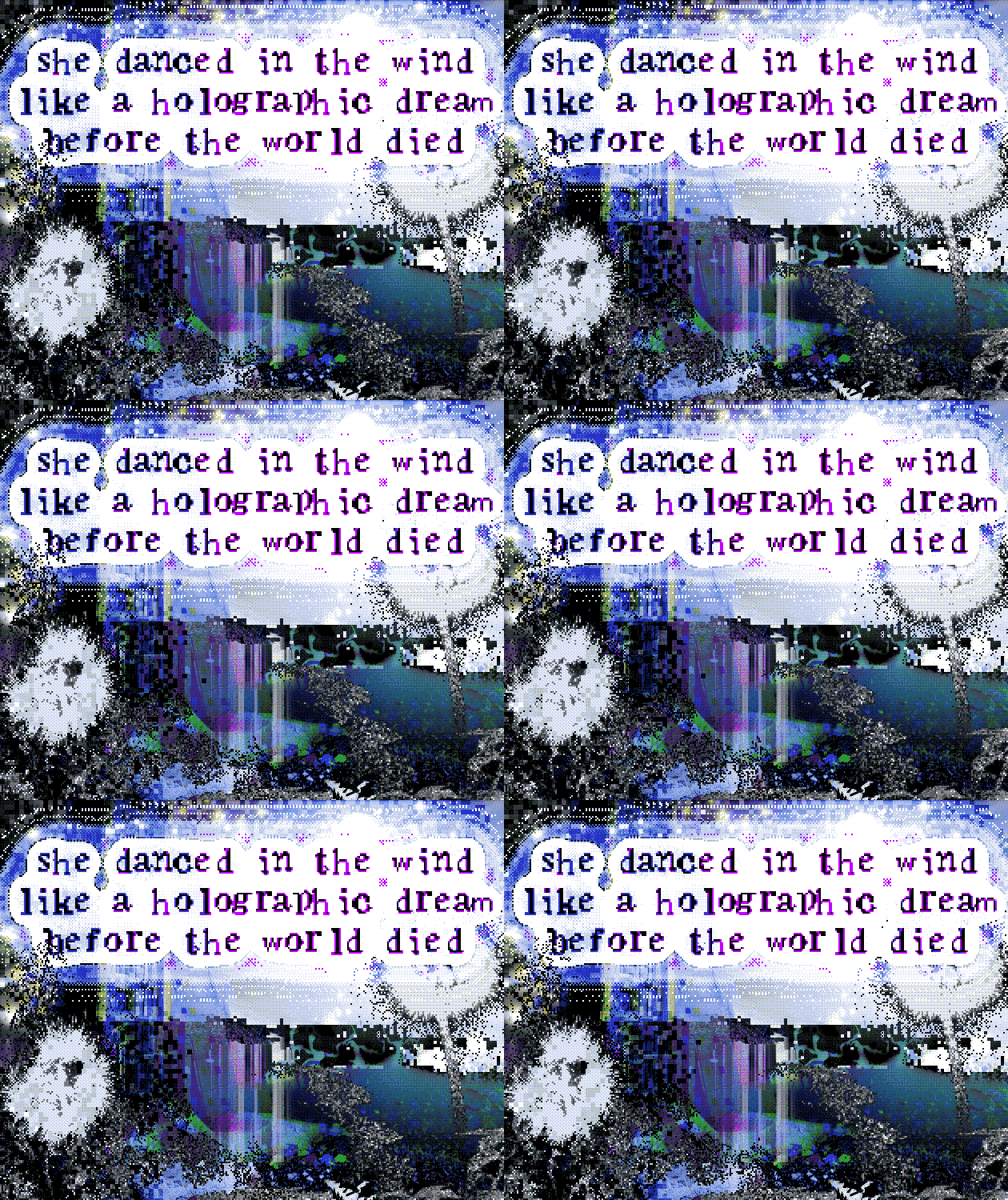
I just published my newest work to itch.io. It’s called “she danced in the wind like a holographic dream before the world died“. A game that ended up being very relevant to the social climate right now, even though I’ve been working on it for over a year. A lot of my own experiences in dealing with surviving powerful abusers went into it, wrapped into a science fiction about the end of the world.
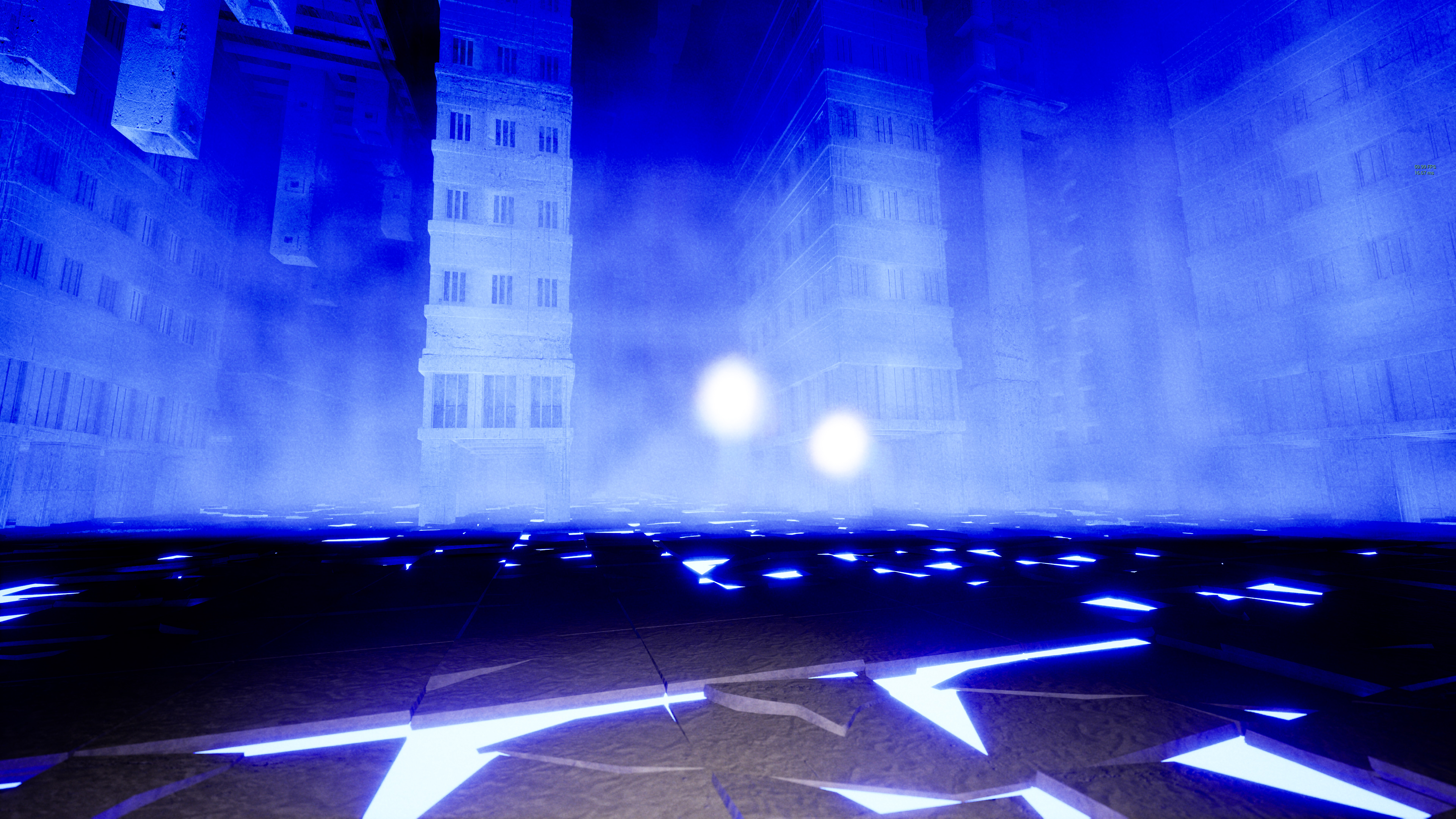
The greatness of this place is built on the shadows of its sins.
Before they abandoned it for something better, it was grand,
Both in cruelty, and in wealth.
The angry decay that now hovers over every wall,
marks an injustice that never really went away.
~~
A short game poem and interactive fiction about The End.
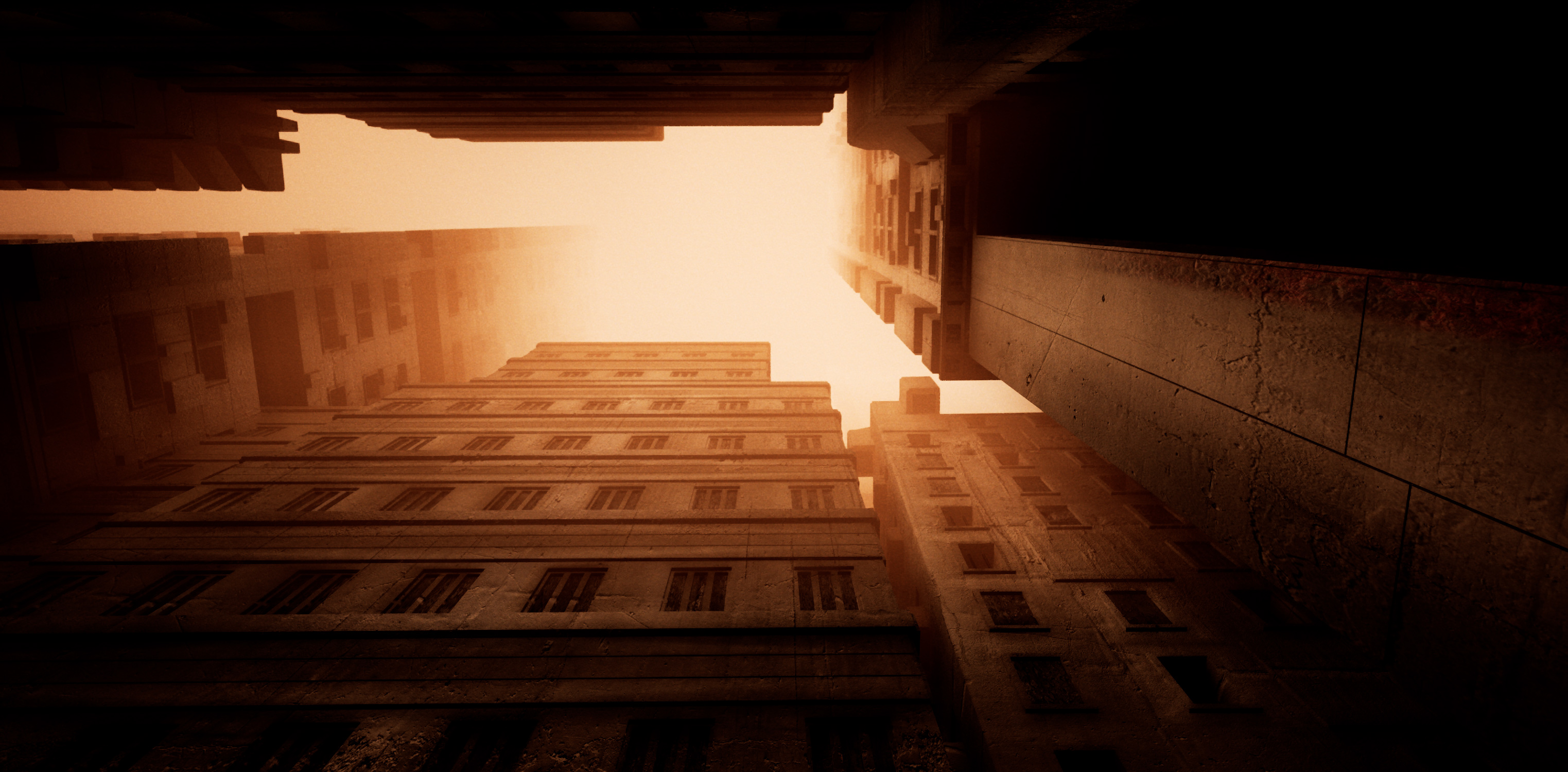
You play the very last flower left on Earth, bringing peace to long dead soil.
Explore brutalist ruins to collect memories of a dead world.
Maybe your presence can heal what is left.
~~
If you like poetry, and Slavic style existentialist writing critisizing power structures, then this is for you.
Exciting developments have been happening in the game space to legitimize this type of interactive fiction!
I suppose “interactive fiction” would be the umbrella term now.
There’s Game Poems magazine that just landed recently. Which is a playable literary magazine dedicated to exploring the artistic and poetic potential of videogames.
I think it is a beautiful and validating thing to see. In the late 90’s, my first project was an interactive poetry experience. I guess now the word for it would be “game poem”. It was hard to convince people that viewed my work through the lense of “video game” that just reading poetry is enough of a goal.
There’s been enough cultural shifts that it’s easy for this work to exist under these labels.
I think “game poems” is a beautiful label to have. This is why I titled this piece a “game poem”.
If you haven’t seen it already, check out Game Poems magazine.
It’s a wonderful project!
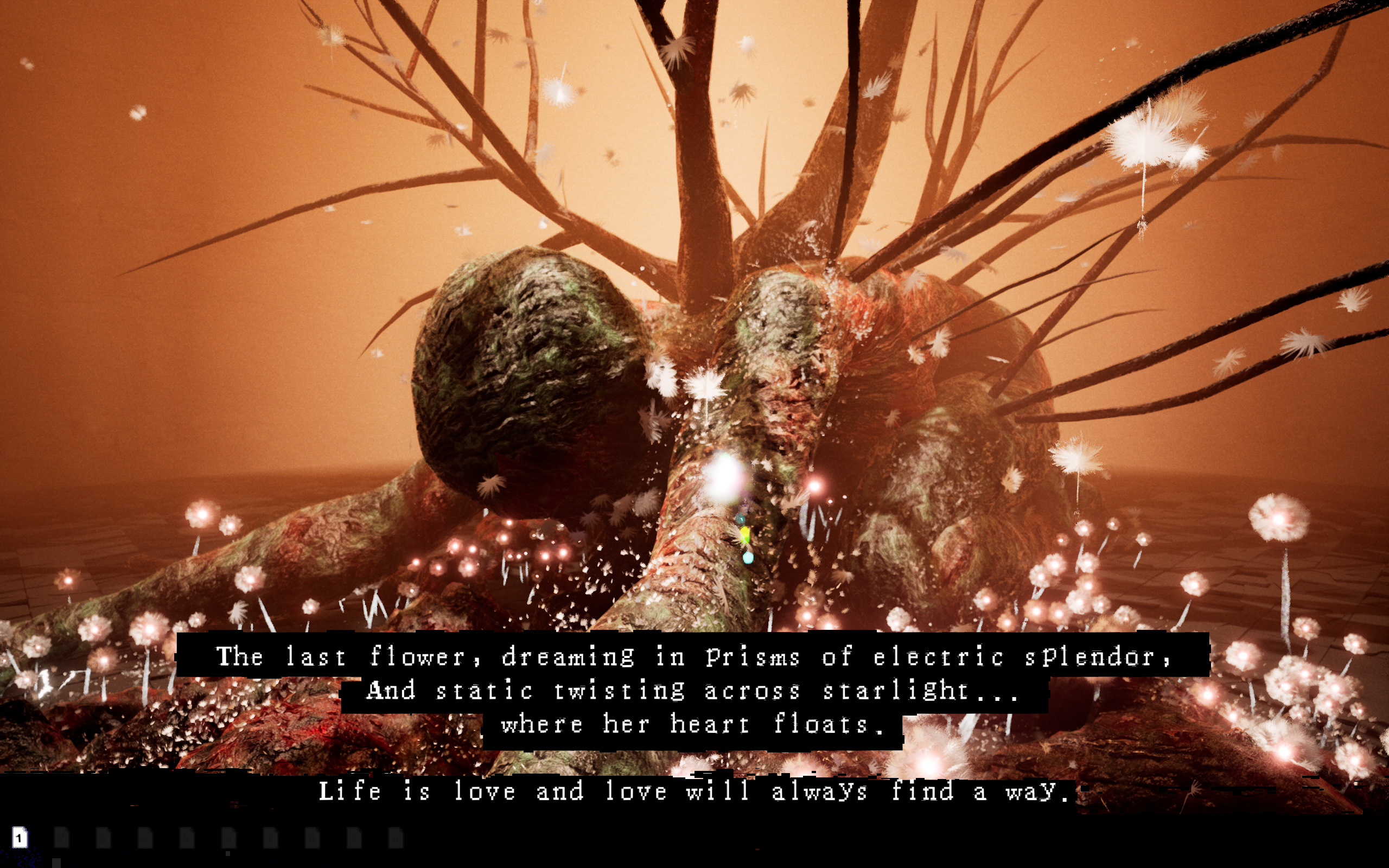
“she danced in the wind like a holographic dream before the world died” is the type of game that is dearly close to my heart.
I feel like everything about me went into it. I cried a lot while making it, just from the catharsis of being able to say THAT… You know, to really go there.
It talks about how social systems, and systems of power, are structured to protect the most monstrous abusive people. Powerful people are evil. They get to do whatever they want. Nothing will stop it. It’s based heavily on my own experiences navigating this.
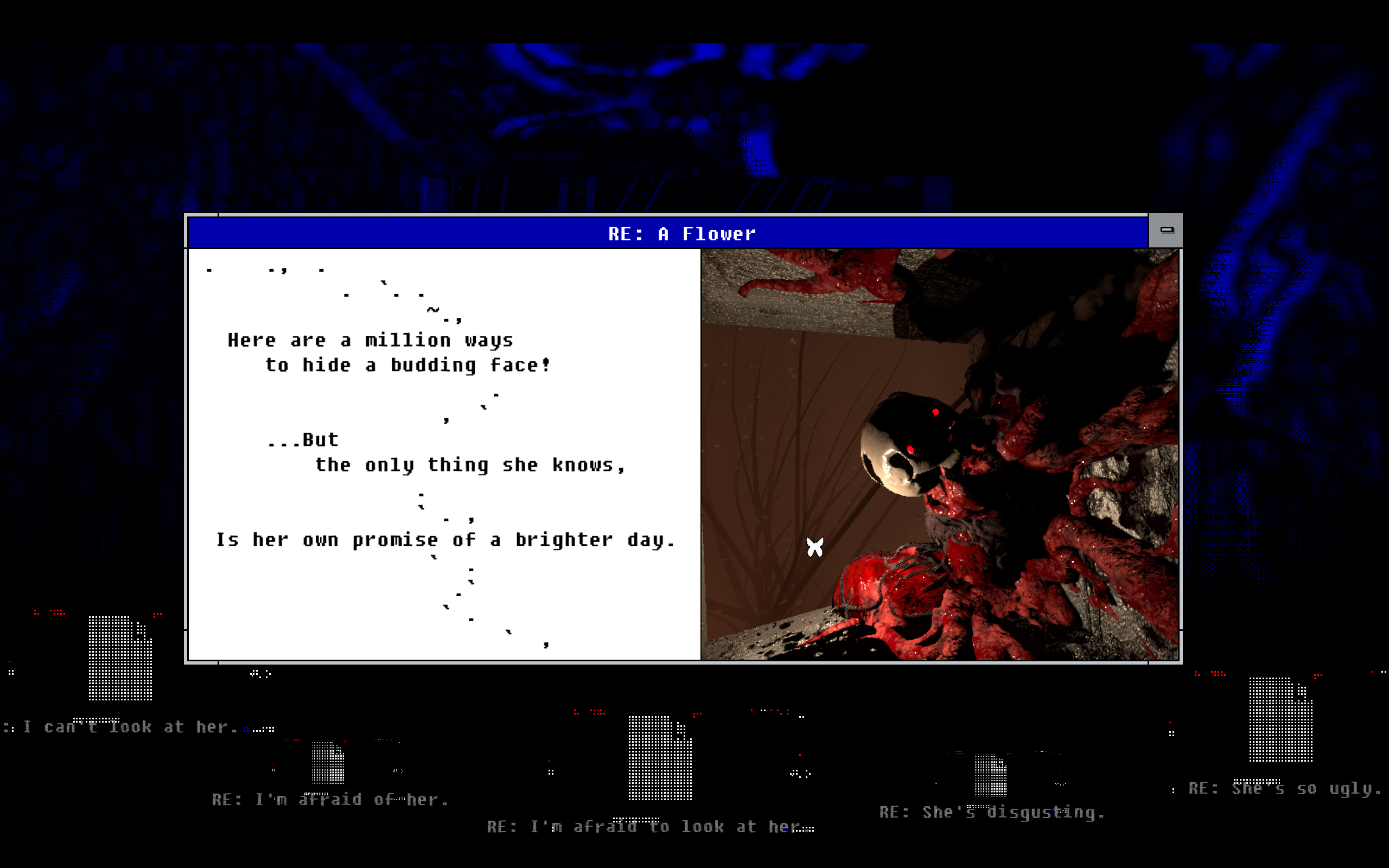
There is a point in the game where I included actual online hate that I regularly get (from the game journalism crowd, or 4chan, kiwifarms, reddit, x…), because of my sexual assault. You can imagine just the worst possible things someone could say to a person. It was hard to have to write all that out, to put it into the game… but it was important to share that reality with people. Switching between reality and fiction, and the reality informing the fiction of the piece. It felt like I was taking a part of myself back by doing that.
A streamer played it and when he saw that part he was appaled that people would say that. It was validating to see.
I think, with the current state of the world, it’s too late to shove these types of stories under the rug anymore. People believe that this evil exists, and it has power.
Survivors of powerful people’s abuse have had to quietly bare this burden forever. In a way now it’s everyone’s reality. It can’t just go away anymore. It can’t just be lied out of existence anymore. It’s too late to blame the victims, or smear them…
Either way, about the technical aspects…
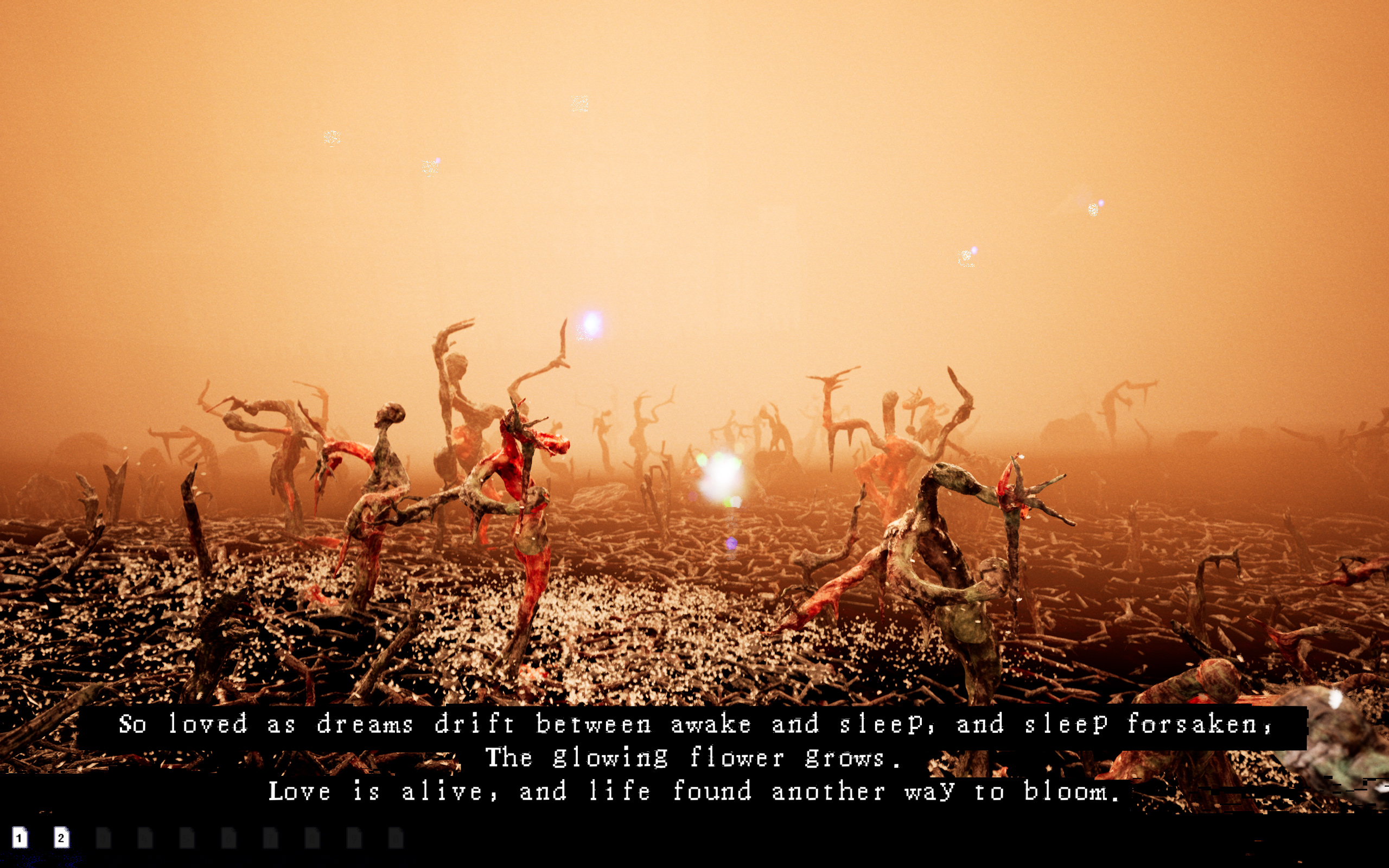
“she danced in the wind like a holographic dream before the world died” was definitely all scope creep! I have to admit that.
It started as an update to BlueSuburbia. It was just supposed to be a simple interactive poem about a Dandelion growing in the middle of a city, being stepped on.
For that, I needed buildings… One thing led to the other and I ended up with Brutalism (I guess it’s what I’m drawn to because I grew up around these type of buildings). Then I thought I could use Unreal’s procedural content generation framework to generate infinite brutalism. At that time it seemed like it would save work if I just made a good ruleset of what I wanted and let classic procgen do beautiful magic. Note that I said classic procgen. Not AI!
I put all this into an open world because I thought it would be cool to be able to explore all that indefinitely… Some infinite, lonely, abandoned, world. You can see how this quickly grew!
Unreal’s PCG is interesting because it’s so… complicated on the outset. It is hard! There’s a lot to understand, if you want to do it right.
When making PCGs for open world landscapes, you can’t just make one giant one that covers the entire open world. You have to break it up into chunks. Then you’re prety much ok. Then you need to understand level instancing. I share this also for my future self, when I pick this concept up again, but forgot literally everything.
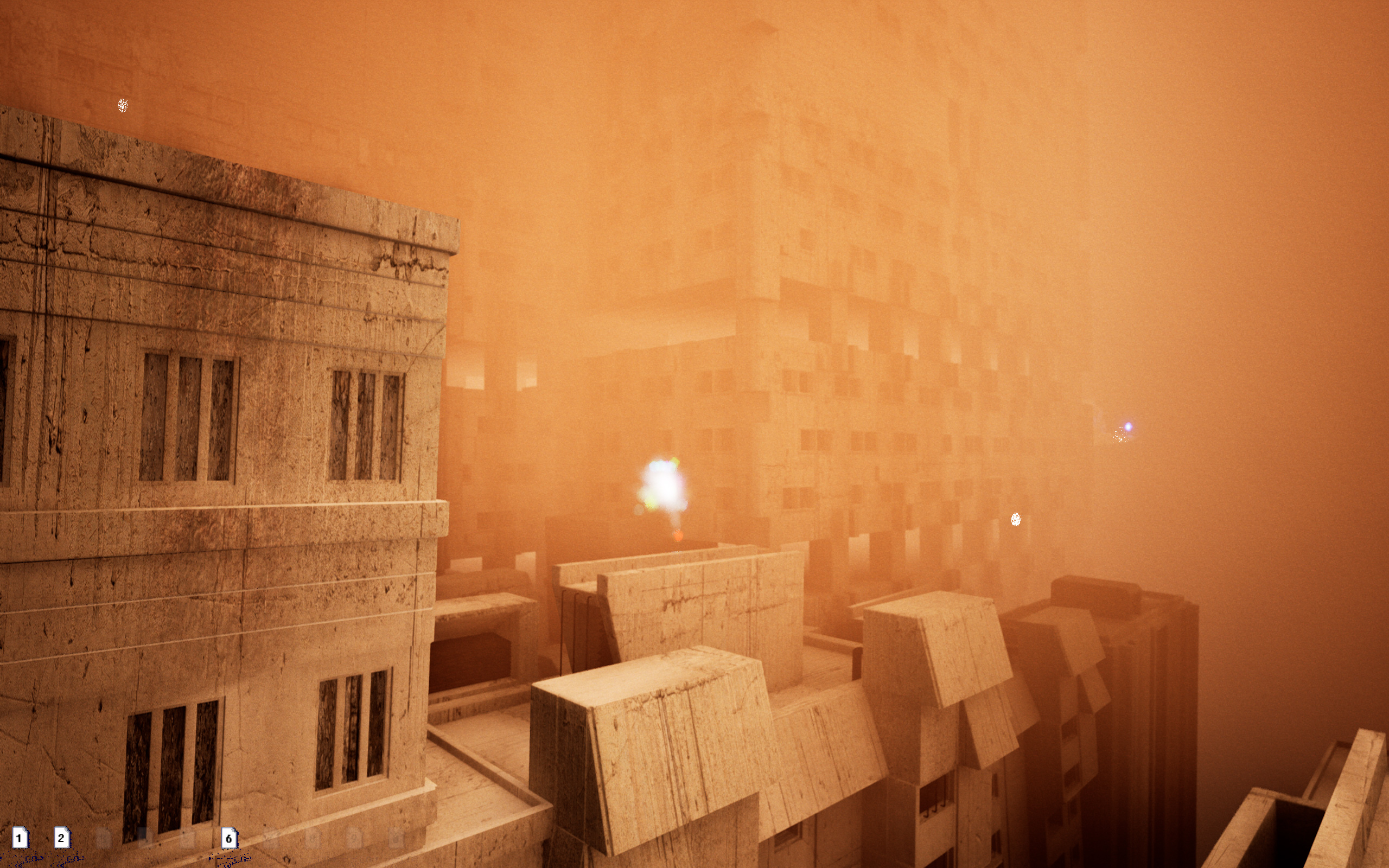
There were moments where I felt like I bit off more than I could chew. A number of videos helped. Most notably this one on optimizing PCGs for large open world landscapes. The trick is that you cannot generate at runtime for such large volumes… at least not for my own skill level. I had to reign in the scope and used it to juts generate landacape and city… but it’s not at runtime and doesn’t constantly change as you play. Originally I wanted each building to be unique, but this also was too resorce intensive for an open world!
At one point I had to comit to a concept and see that through. So it’s partly procgen.
PCG is incredibly useful for creating landscapes. It was so much nicer than having to manually paint everything… or create landscape material layers that handled grass, rocks, cliff rocks… You can get much more specific about your rules with PCG. Like you can be specific about how you want grass to grow, how rocks should be scattered… I think it’s definitely the more performant way to go too.
It also helped with the transition between scale. Like the changes between level of detail were easier to make seamless.
Once I understood that I can just use PCG Stamps, or level instancing, everything fell into place.
I’m amazed that I got 60 fps on my crappy Dell, on the “optimized” setting for this game. Barely anything runs on that machine!
An interesting thing to note is that you can get all this to be incredibly performant, but you really have to know what you are doing.
This is where I felt like I bit off more than I could chew. I keep saying that because… man it was hard.
At one point it seemed like everytime I fixed something, ten other things broke. I think if I ever make an extention for Unreal it would be just an alert prompt that ocasionally pops on the screen saying “Are you sure you want to do that?“, whenever I change a setting.
These three videos were incredibly helpful…

This project uses lumen in combination with emissive materials and volumetric fog for the “lighting” (in combination with post process exposure settings to tweak the transition between light and dark spaces)… instead of classic light sources. Asside from a very basic Sky Light, there are no light sources. I think emissive with volumetric fog is a beautiful effect. Sometimes it’s not ideal, but in this case I liked the artifacts. Asside from the tower area, which does have light sources, I was able to save a lot of performance by restricting use of light.
I know I’m still learning, but this seemed like the best approach. It was also the most beautiful looking.
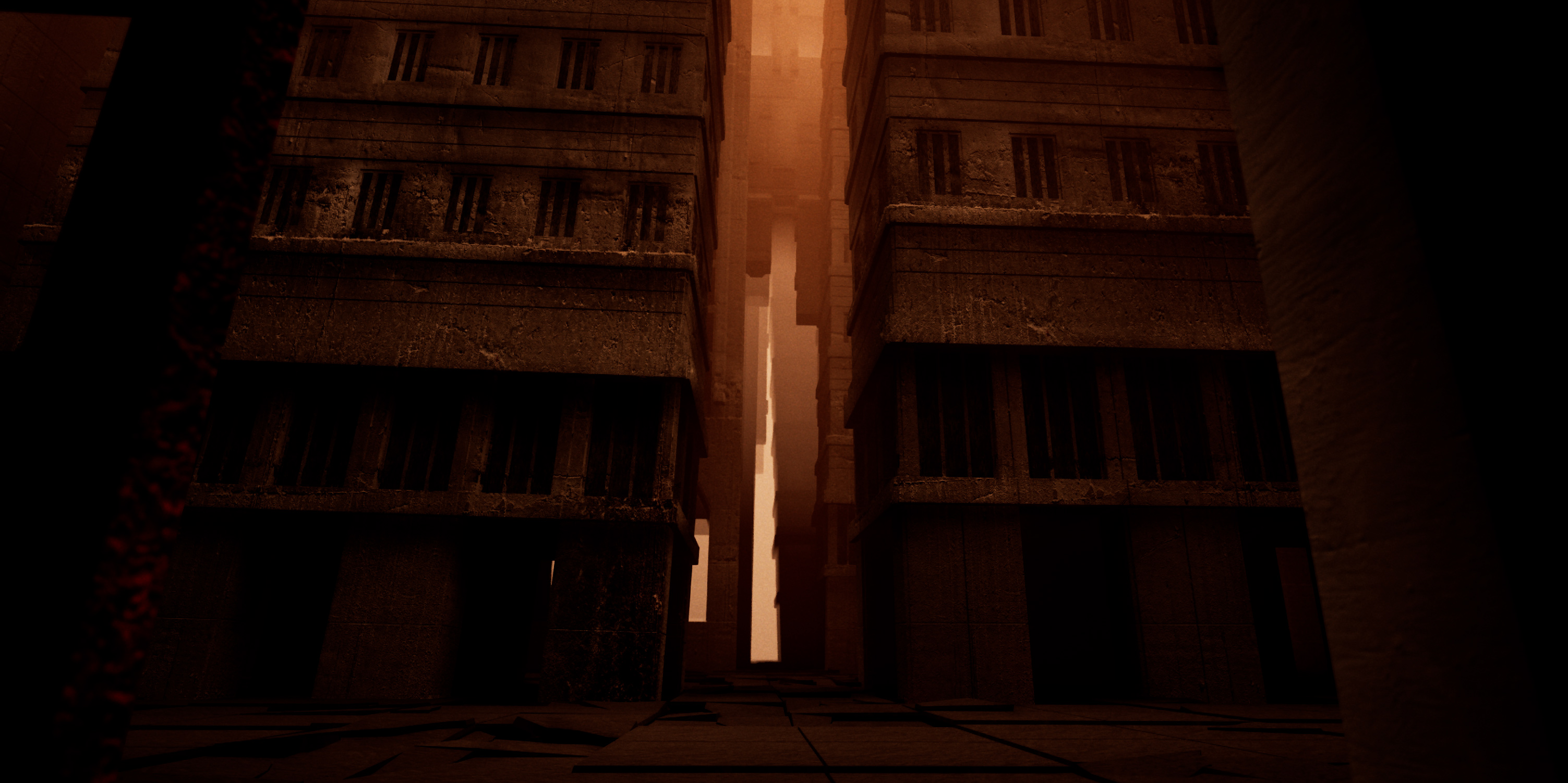
Once the world was set up I needed to structure the actual story. I always wanted to do something that leans more into science fiction. This time I wanted an actual overarching story that sets the tone!
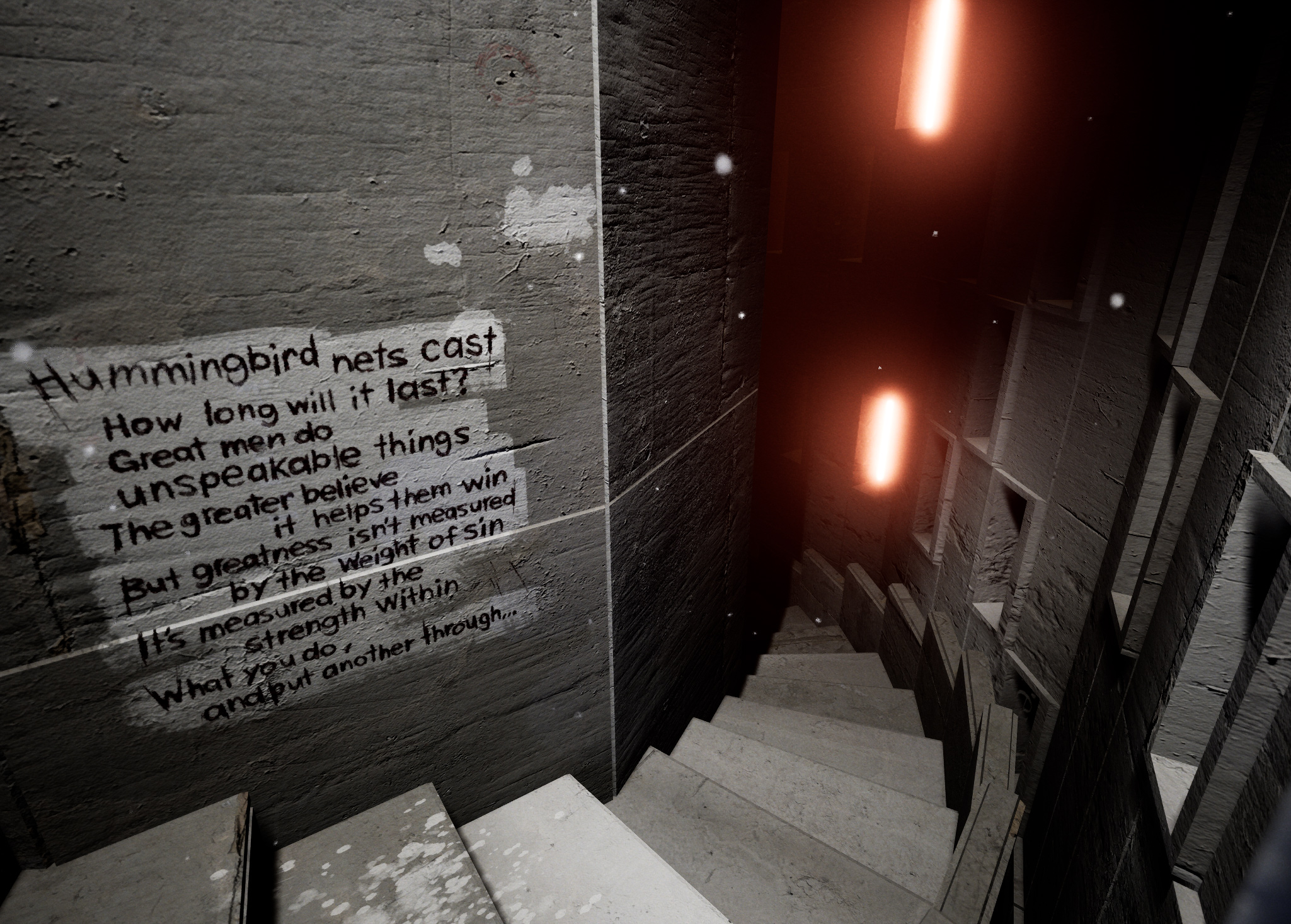
I had plenty of ideas… The concept of being a delicate flower, that somehow survives despite everything, was an important theme.
It lends itself well to commentary on power, because you would not frame a flower as powerful. In this case, power comes from somewhere else… especially if you are at the mercy of forces beyond your control. Your power is to bring healing.
It fit the poetry.
Poetry happens as the space itself, the interaction, and then the literal writing.
Balancing this in a way where it wasn’t too on the nose, or pushy about these themes, was important. I didn’t want the player to feel like they are being lectured with social commentary. It had to feel like they are grieving along with the world that they are in.
They are part of the emotional space that’s created.
The writing did most of this heavy lifting.
Also note that chasing a feeling is the best way to design a game! It’s all about feelings. :)
The initial problems when I first did “interactive poetry” so long ago was that players don’t like to read. I know this culture has changed since the popularization of interactive fiction, but still… You can’t just give them text. Writing is so much more than text. Writing is alive. Writing is a space! It’s feeling… Text has to have a purpose. It’s even better if it’s part of the world.
I think it worked in this project because of the packaging. The art, world, lighting, texturing (all that tedious hand crafting of the space) makes it look compelling. It’s an actual space to exist in. The world encourages you to care about the writing.
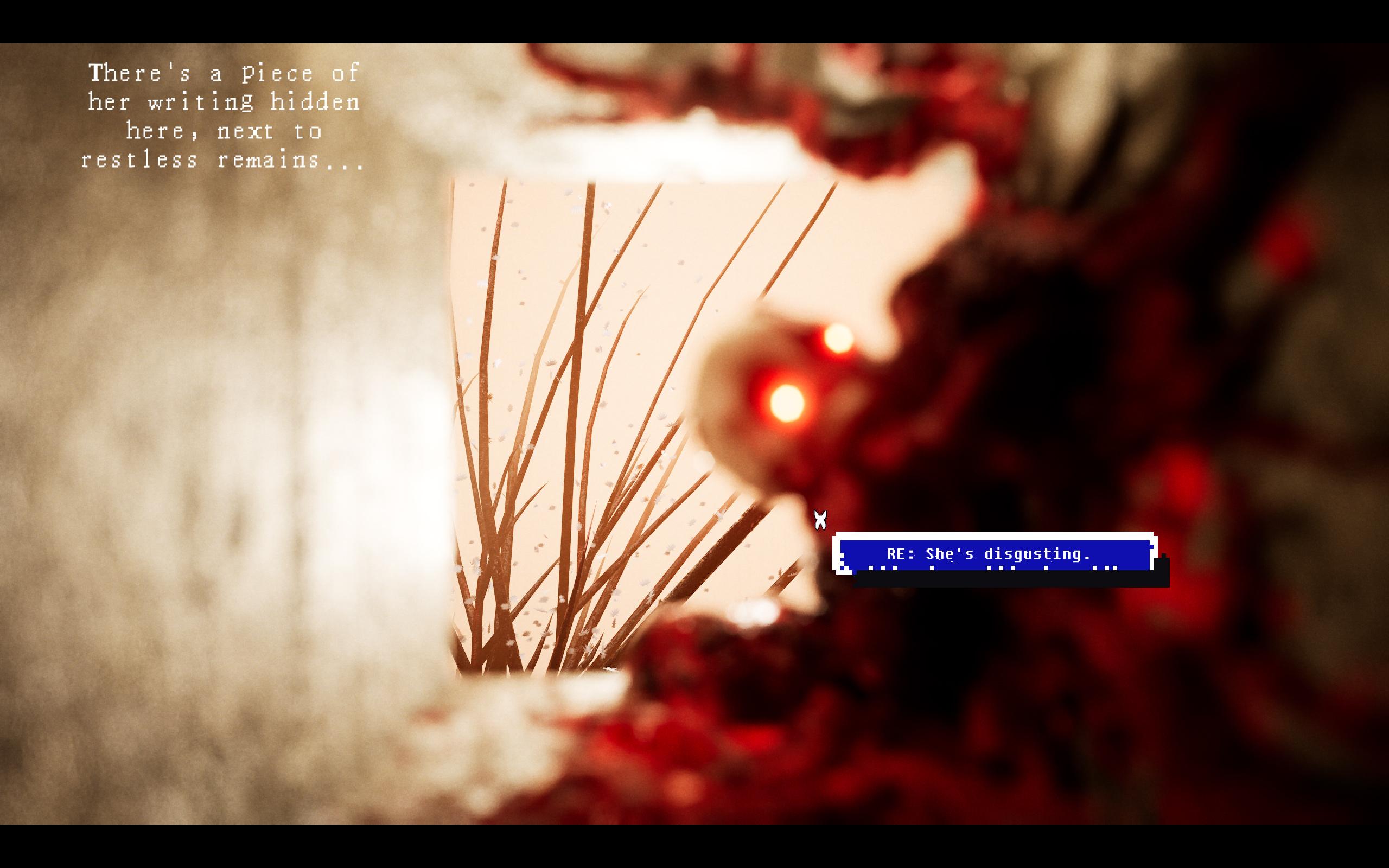
In “she danced in the wind like a holographic dream before the world died” you collect the memories of a murdered poet. The last poet. The social and political context surrounding that is a commentary on today’s injustices. Someone beautiful that caused no harm to anyone, being snuffed out. A stolen future in a world that had its own future stolen…
The memories that you collect offer fragments of the history of this world. It’s done in a way where you don’t need to read them in any proper order. I think this was important because players are curious. They are smart and can surmise meaning themselves. In video games there’s a tendency to be really literal about messanging, but I think being gentler and trusting the player’s intelligence is much better. In this case it worked because they have a lot of space to read their own experiences into it too.
The collected story parts are Twine that’s running inside of Unreal. Bitsy is also embeded into these Twines.
I like how that turned out. The Bitsy pieces are kind of like an illustration for the writing that’s in the Twines. And then the Twine is what informs the Unreal world. Structuring all this as Easter Eggs that encourage exploration, where you can go as deep as you want, ended up being very compelling.
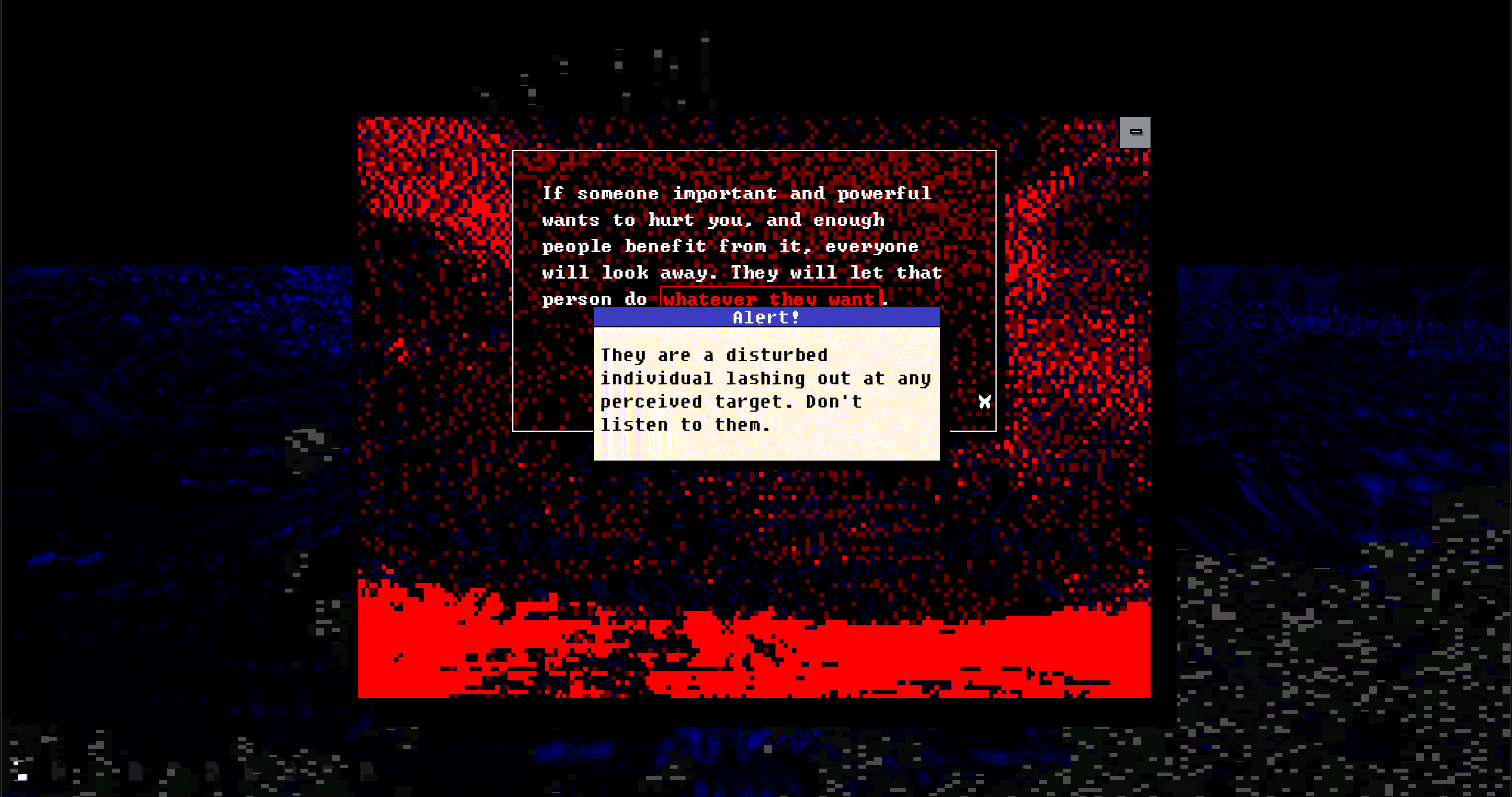
I have a devlog of how to get Bitsy working in Unreal here. It’s the same for Twine or anything HTML.
Embeding all this as HTML was effective because you can use the styling strengths of the browser. Unreal’s UI widgets can be really restrictive. I think it’s most effective if you mix the two.
The audio work on this was tediously designed too. I’m using a lot of Audio Volumes, Sound Cues, and procedural music to make transitioning between spaces, UI’s, writing… seamless. The audio is designed to stack so that you can blend between these different environments. I also took the very tedious time to make sure if you are in a building, the sounds change to being windy. There’s outside and inside noises. I do love how video game music is never just music. You actually have to design it too, so that it fits into a system.
Gamedev is never straightforward!
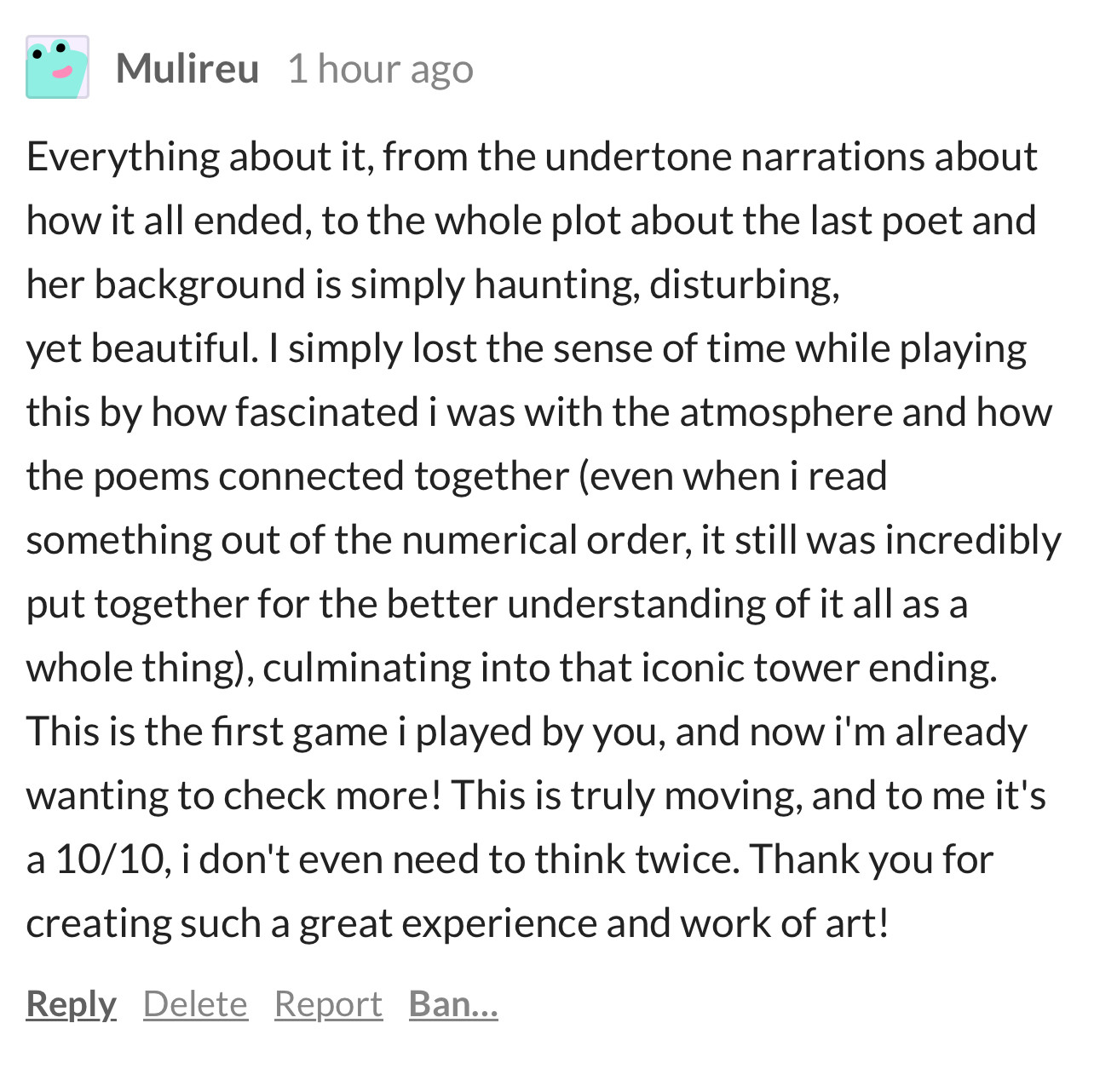
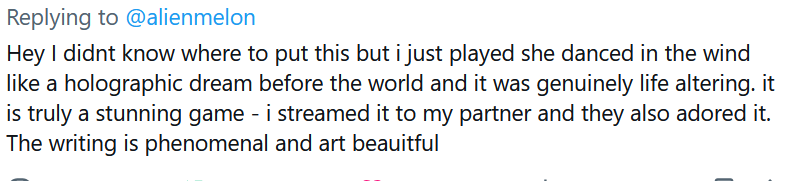
The comments about it have been everything. One person called it “life changing”. I’m so proud of it. I think it trully worked out as an example of a game poem. I can confidently say that people like poetry in a video game!
A macOS version will be coming soon. I have a used Mac coming Friday. the macOS version will definitely be available on itch.io.
I will also finally make a Linux build. I plan to install linux on a partition on the new Mac so that I can use that to build for Unreal. I know that you can build Unreal for Linux from Windows, but I’ve never successfully pulled that off. It seems like you do need the OS that you are packaging for… So I’ll finally have that set up.
The project also made a little over $100! I’m able to use that to pay for the Steam store listing. It’s coming to Steam!!
Thank you everyone that played and shared it! Your support has meant the world.
It will not be written about by game publications because I’m still blackballed by the game press after standing up for myself… I don’t contact press anymore for that reason… so if you don’t mind sharing it, it would help a lot.
I will have more to share soon!
